Day 1: Kick-off night

TL;DR: I typed “let’s get started” at 6:03 PM and six pieces of work kicked off at once. Seven hours later I had a C++ framework that compiled cleanly, a greybox of Segment 1, the Guard’s kit and the first bots from Codex, a scaffold for this website, and Codex running on its own instead of me feeding it by hand. I also had a game that loaded to a completely black screen, and no idea why.
6 PM: everything at once
I’d spent the two days before the jam getting ready with Claude, so that when the clock started, one word from me could set everything moving. It worked. Within a few minutes Claude had threads running on my PC and in the cloud: one creating the Unreal Engine 5.9 project, one writing the core gameplay code, one gathering free assets, one planning the level, one sorting out characters, and one writing the first jobs for Codex.
The first real hiccup came almost straight away. The thread setting up the Unreal project saved an Android security token into a config file, which would have gone into the repo. Claude caught it in review and stripped it out before anything merged, and “never commit that token” went into AGENTS.md, the rulebook every AI agent on the project reads before it starts. It wasn’t the last time that rule earned its place.
By about 9:30 PM the core framework was in (PR #5). It’s the shared code every hero plugs into: health and damage, skills built from five shared building blocks, gear slots, a stub for the director, and balance tables kept in plain CSV files so I can tune numbers without touching code. It compiled on my PC first time, with no errors or warnings, which felt like a small miracle on a preview build of the engine.
Picturing the place before building it
Early on I asked Claude whether we should picture the map before building it. So Claude wrote prompts for ChatGPT’s image generator, a top-down layout first and then each area, and I generated them. They didn’t set the exact layout, but they gave me the mood I’ve been chasing ever since: moonlit mud roads, thorns, lanterns, a barricaded tavern and a gate out of the castle.
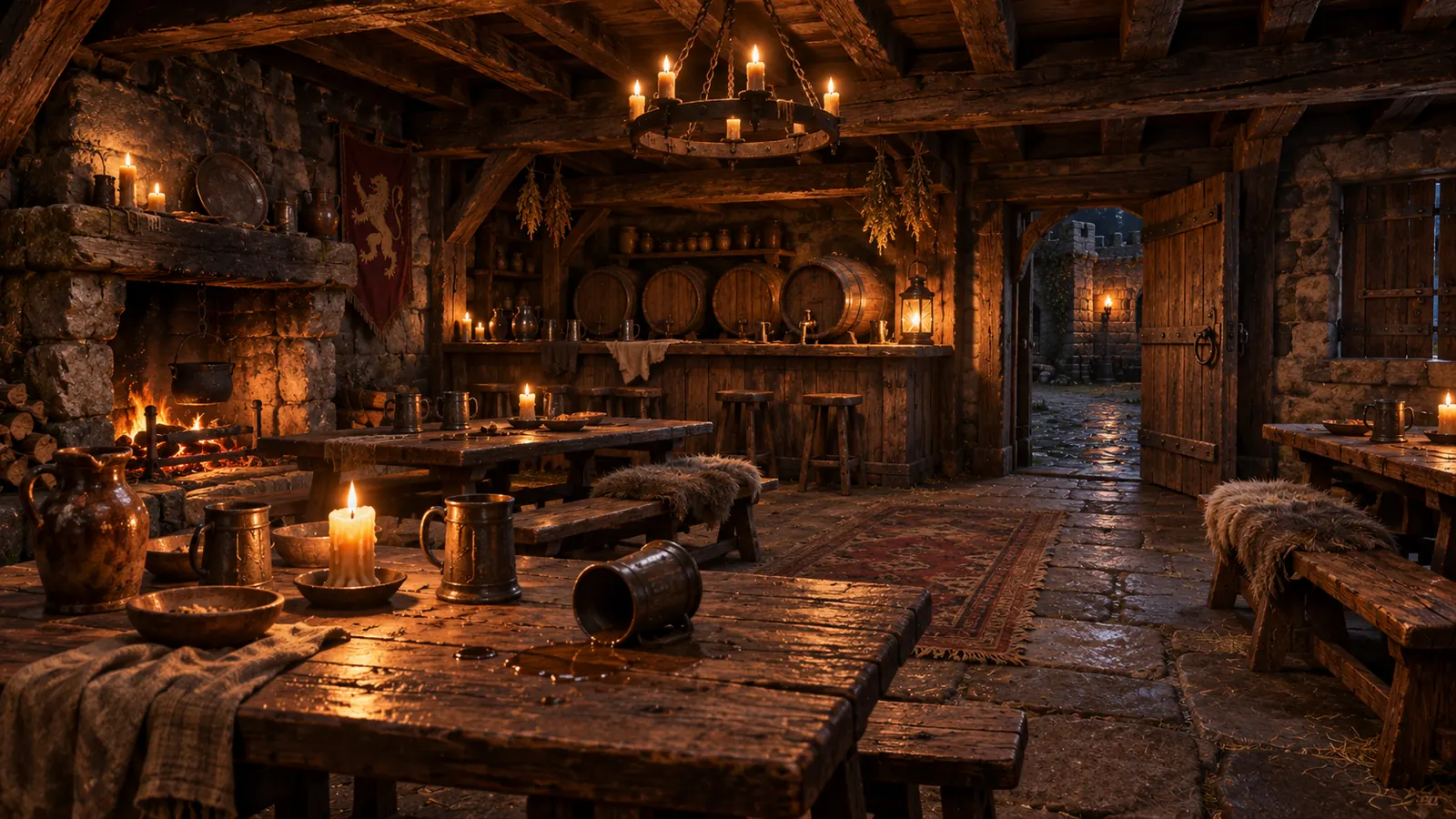
One of the early concept images I generated in ChatGPT from Claude’s prompts. Concept only, not in-game.
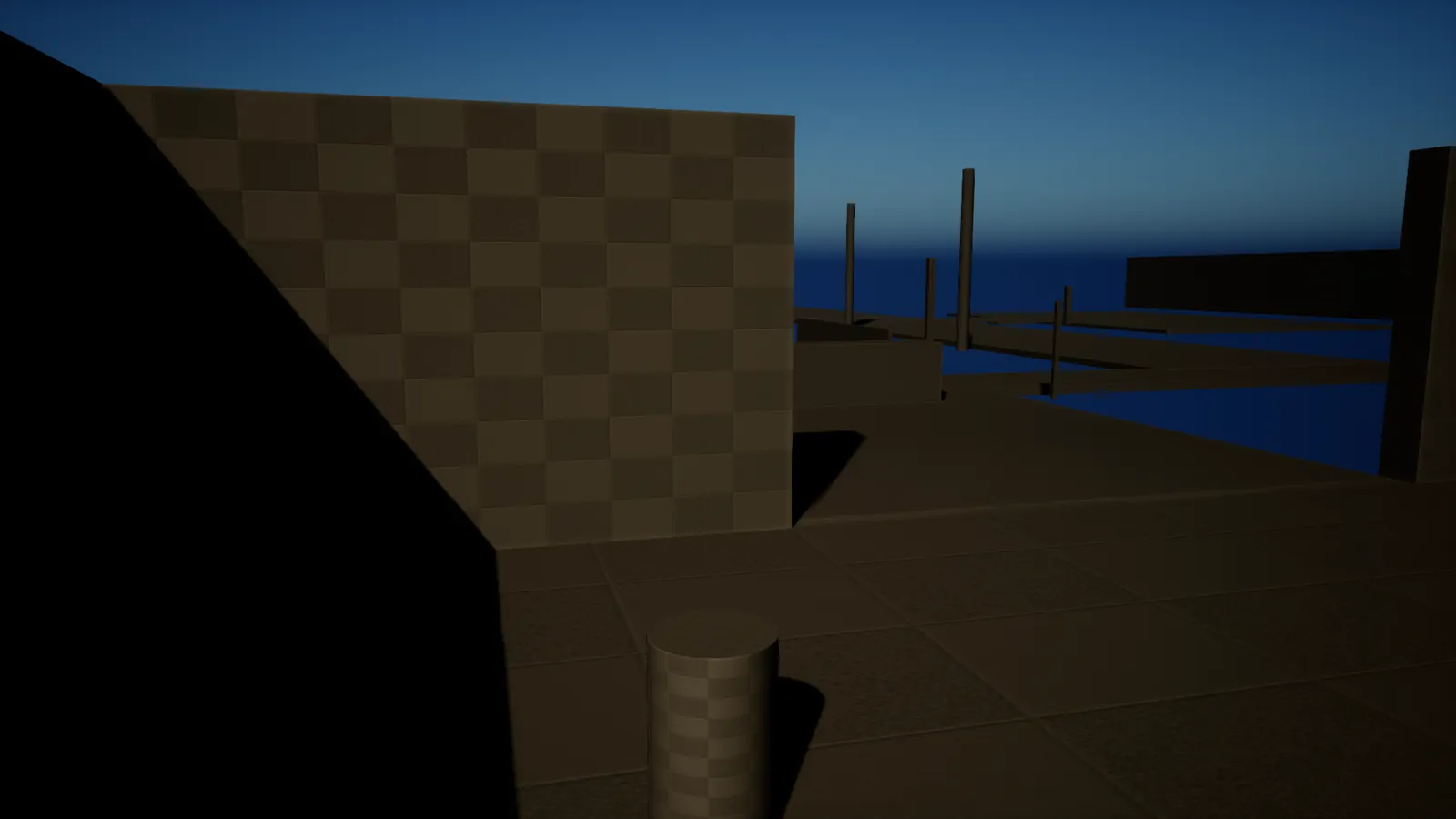
Then a Python script laid out the first greybox: the castle courtyard opening, three routes and Checkpoint 1, all in plain shapes (PR #8). It’s ugly, and it’s meant to be. Greybox is where you find out whether a space works before you spend any time making it pretty.
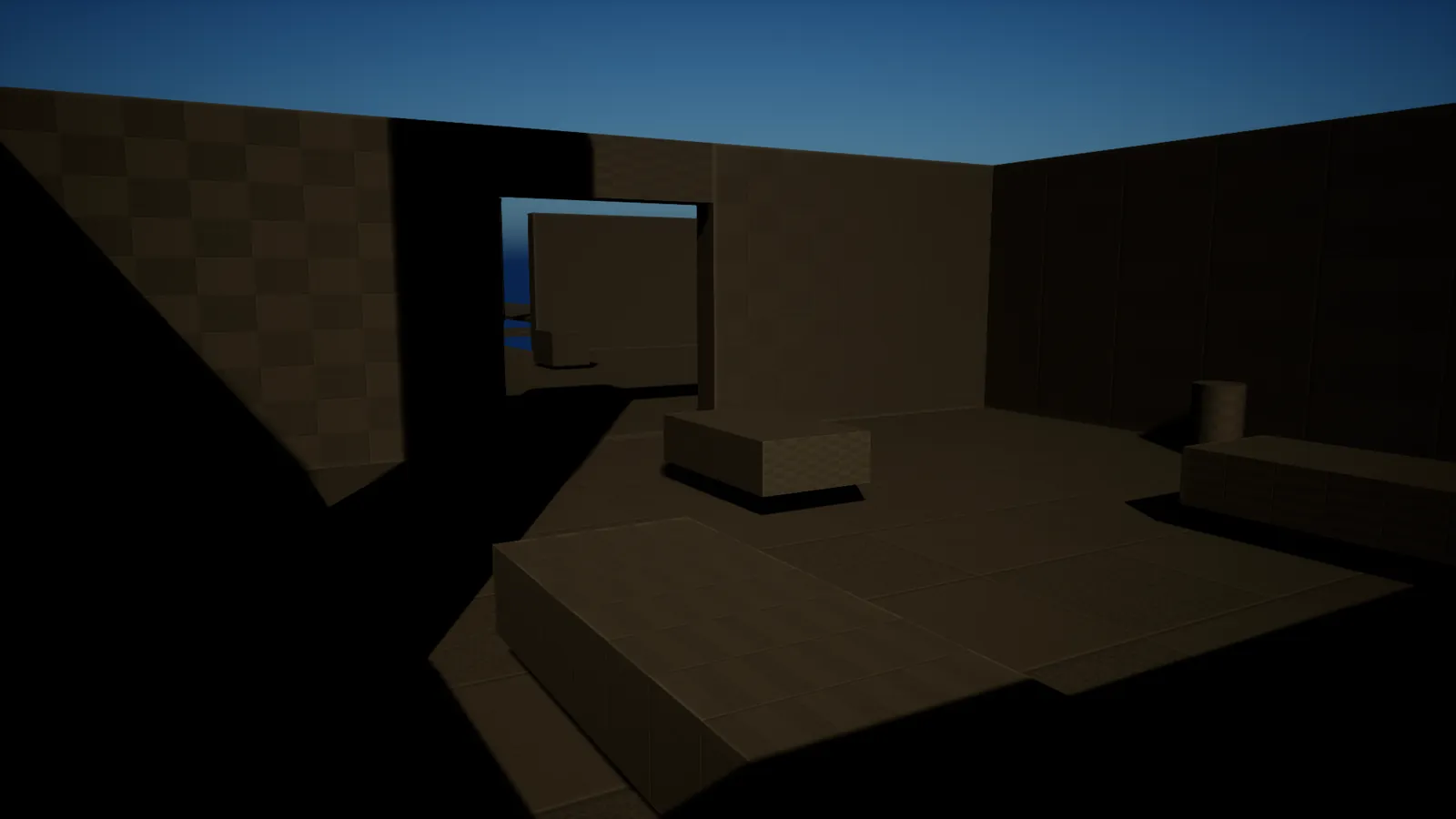
The tavern room in greybox, where every run starts.
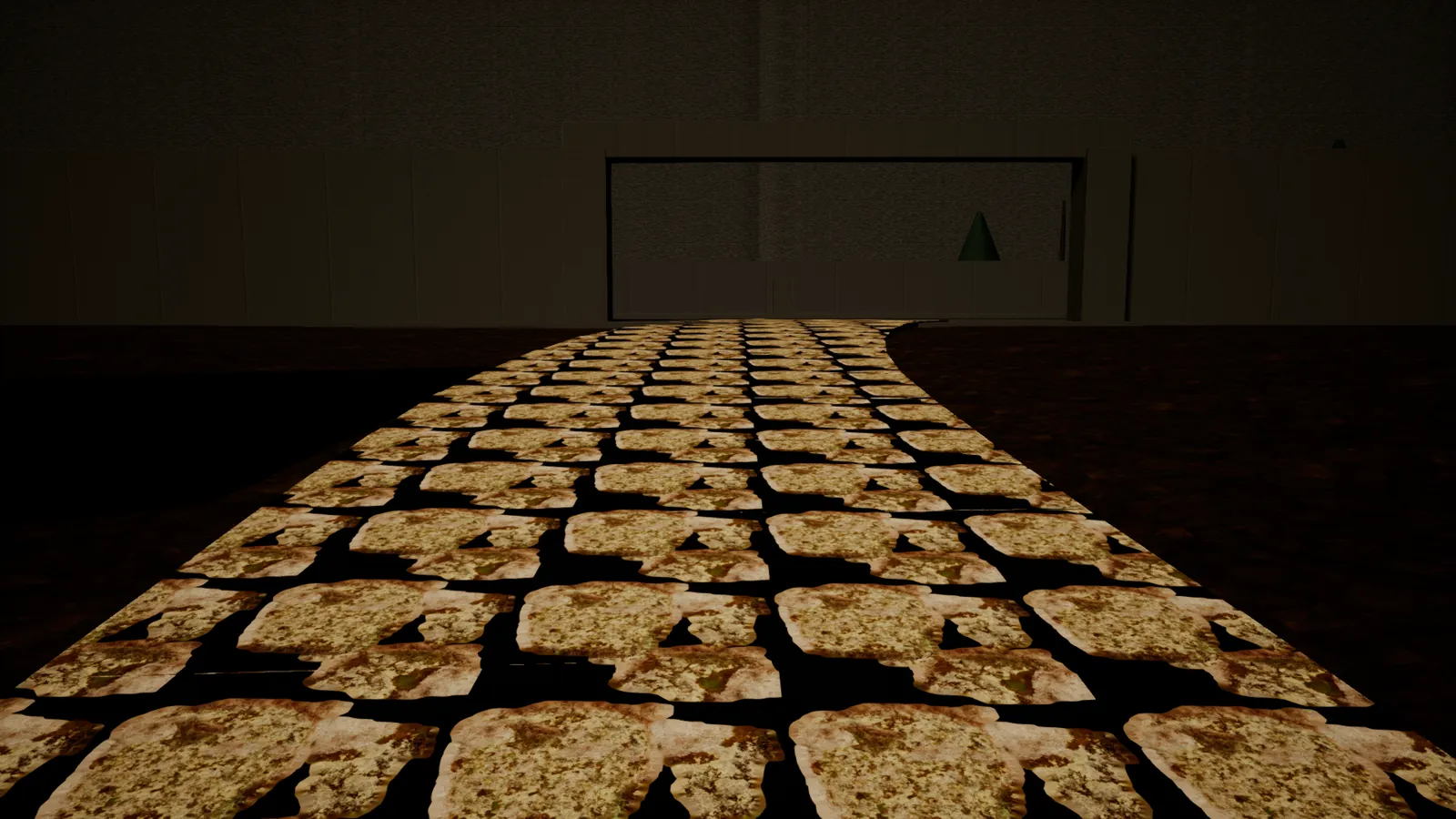
Checkpoint 1 in greybox. Everything here gets replaced with real art later.
Characters I had to make myself
You can’t buy four drunk medieval heroes and a druid off the shelf, so I made them. Claude wrote the character prompts and I generated concept art in ChatGPT, starting with the Guard. The first round came out holding swords and shields, which sounds great until you realise weapons need to be separate pieces you can pick up and drop. So characters get generated empty-handed now, and gear is attached afterwards. I also decided the Hunter and the Tavernkeeper would be women, and after one round of tests I chose to keep the characters I already had rather than start over.
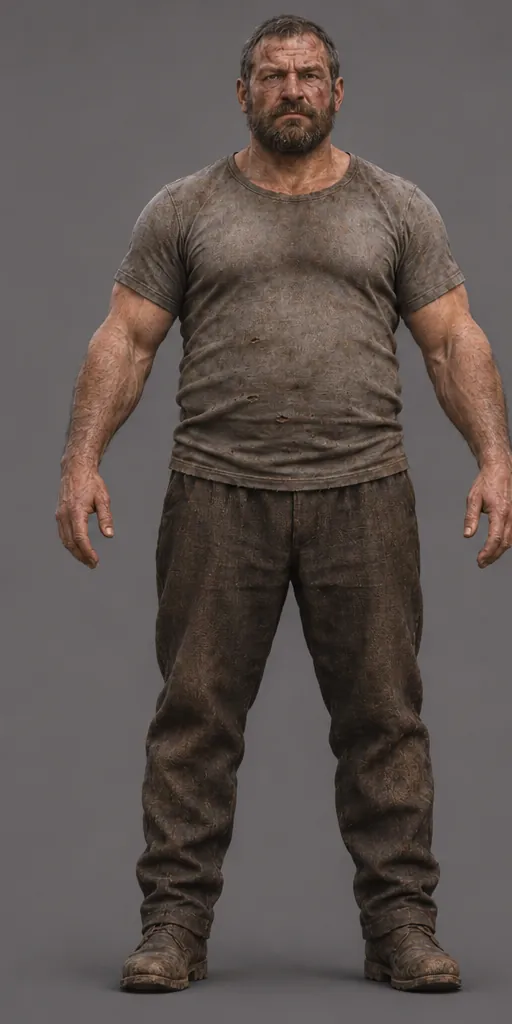
An early Guard sheet from ChatGPT. No weapons, no armour, just the man underneath.
Codex asks good questions
At first I pasted Claude’s prompts into Codex by hand. Codex didn’t just charge ahead: it stopped and asked real questions on the GitHub issues. Who can see the Hunter’s Mark? How big is the Guard’s Buckler Wall? How should Volley work? Claude answered each one on the issue and fixed the core code where the questions exposed a gap, so the Mark now shows for the whole team and the wall blocks for every player (PRs #11 and #13).
By midnight Codex had delivered the Guard’s kit (PR #12) and the first bot behaviour, with bots that follow, fight and commit to revives (PR #17). Both needed a fix before they’d pass: their tests crashed during setup because of how the test worlds were being created. Claude worked out the pattern, fixed it, and wrote the rule into AGENTS.md so Codex wouldn’t repeat it.
At 10:36 PM I made the switch that shaped the rest of the jam. Instead of me pasting prompts, the Codex CLI now runs headless on my PC (codex exec), driven by a Claude thread that follows a written runbook (PR #20). From then on, Codex could take a job without me touching the keyboard.
This website gets started
The site you’re reading started the same night. Codex built the Astro scaffold with every page working and an accessibility score of 100 (website PR #1), then applied the first Director’s Cut copy (website PR #2), and Claude reviewed and merged both. The first menu mockups appeared too: nine screens in a dark-tavern style that I’d later throw out and rebuild properly.
The hard parts
The black screen. Around 10:50 PM I ran the game and it loaded to black. Not dark: black. Screenshots from the editor came out black too, which was worse than it sounds, because it meant Claude couldn’t see the level it was trying to build. The editor’s built-in MCP connection (the bridge that lets Claude drive Unreal) also turned out to have no tools for taking screenshots or opening levels, and the background run closed before any shots could save. Late that night a test showed a cube at last, lit by two directional lights fighting each other. I went to bed without knowing the real cause, and it took until the next morning to find it.
Too many builds at once. Some Codex jobs got started twice by mistake, and running several Unreal builds in parallel crashed the build tool. The rule since then is simple: one build at a time.
Permission checks. My PC has a safety check that stops Claude from pushing, merging or deploying unless I’ve approved it in my own words, in that same thread. It’s a good rule, but it meant approvals I gave in the main chat didn’t count there, and a few pushes and merges stalled until we moved merging to cloud threads.
Getting assets in. The Epic Games Launcher wouldn’t accept remote control at all, so Claude switched to Claude in Chrome on fab.com and claimed four free packs: Medieval Village Megascans, Medieval Banquet, the Game Animation Sample and Niagara Examples. Mixamo needed me to sign in myself, and then the asset session dropped offline before it could carry on. The Longbow, Sword and Shield and Pro Melee Axe animation packs did make it into a raw-assets folder outside git by the end of the night, with me clicking Save on a lot of download prompts.
The website didn’t go live. My first attempt to deploy this site failed with a Cloudflare account error. It stayed offline until Sunday morning.
My PC goes to sleep at 12:52 AM, so every thread saved, pushed and left a status note by 12:45. Then I went to bed.
Tools I used, and for what
Claude Code Desktop with Remote Control ran everything that needed my PC: the Unreal project, C++ builds and tests, and the level scripts. Cloud threads did the planning, reviews and ticket writing. Codex wrote the hero kits and bots, first through my copy and paste and then through the Codex CLI. ChatGPT made the character and map concept art. Fab, Megascans and Mixamo gave me free environment art and animation, Claude in Chrome claimed them, and GitHub held an issue for every Codex job, with one pull request per issue.